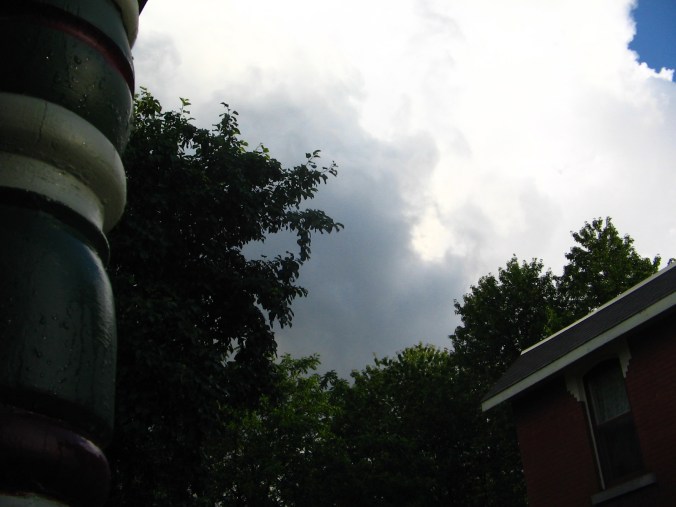
 More from Cornwall. While I was living here, I made the decision pretty early on to do what I’d originally intended to do after undergrad, which was live abroad. I started looking into teaching jobs in Asia. My boss was furious – I was too naive to realize it at the time (thank God, because, as will become abundantly clear in the coming posts, I care way too much about what the world thinks of me). But he had hired me with the expectation that I would stay on, contract to contract, for a long time. Yes – I had not been hired as a permanent employee. Few people were in this sector of the government. So in my mind, it was perfectly legitimate to leave.
I was drawn to warmer climates, having lived my entire life in southern Ontario with its bitter winters – biting is a great term for the icy, dry wind that punches you in the face as you try to wobble up the icy sidewalk, simultaneously freezing and sweating from the struggle. When I found a program that based teachers in the tropical south of China, close to Hong Kong, my heart skipped. Hong Kong. Thus began my love affair with this city and its sublimity. I’m sure others would say I was a fool who was blindly in love, and that I didn’t realize all of Hong Kong’s faults and annoyances, but I didn’t care. I hadn’t even met Hong Kong face to face and already I started dreaming of it. So that was it for me. That was my program.
I was accepted to it – and then the fear started. I am full of fear, you must realize. And it attaches to everything. The core of it is abandonment for not being good enough – being left to a bleak wasteland, where everything is dimmed several shades down, and takes on the lifelessness and coldness of stone, and I myself become as numb and as lifeless as stone.
Most of us can’t sit with this fear: it’s old and mysterious, and wrapped up into so many experiences that triggered habituated actions and reactions to avoid these intolerable feelings. I certainly couldn’t handle it at the time, and I’m only starting to learn now, more than a decade on. So I created reasons for this fear, and solutions upon solutions to manage and get out of this fear.
My outlet this time? I became afraid of bird flu.
Bird flu – H5N1 – was rampant around 2006 in Southeast Asia. Mainly among domestic birds, but it also made the jump to wild birds and humans, with deadly consequences. In fact, it first made the jump to humans, from what we know, in Hong Kong. H5N1 was all over the news and the WHO and other organizations were constantly engaging in hand-wringing over whether or not it would start spreading from human to human. I feared it would become pandemic when I went to live in southern China, and that I would be trapped there, away from my family. I read everything I could get my hands on about H5N1 – blogs, news sites, commentaries, WHO reports – to try to figure out the statistical possibility that this would actually happen, desperately trying to tip the scales in favour of “no, this is not likely”. Yes, I became obsessed with, and at times paralyzed in, this issue. I was afraid of my future in China, but also fearful of backing out of the program (because I would hate myself for not embarking on my dream out of fear) – I felt like I had no way out of it. It was a veritable “hall of mirrors”.
But deep down, it was more about just being caught in a pandemic – it was a hating feeling, hating myself for being so stupid for going to live in southeast Asia during this outbreak, and also feeling mocked and hated by others for doing this: “What were you thinking? Wow, only an idiot would do something like that.” Those were the voices in my head.
What was the real reason I was scared and created this demon? Well, I had finished school – the one place where I had a steady stream of good grades and other accolades – and I felt like an utter failure, like I had strayed from my path, which was supposed to be towards grad school and more accolades and other such narcissistic supplies of pride. In other words, my antidotes for my self-hate were gone, and going to China was only bringing me further from those antidotes. At least I think that’s what I was doing.
So you might think I am pretty messed up for creating this demon in my head: what good did it serve me? Absolutely nothing, in hindsight. In fact, I developed wrist problems from searching the computer for hours on end for articles about H5N1, not to mention stiff muscles and upset stomachs and all those fun physical symptoms that come hand in hand with anxiety. It did me no good. But such is the manner of fear and self-hate. We need an out in those terrible moments, and we all find ways that, looking back, do us no good (at best) and are debilitating and destructive (at worst).
I’ll have much more to say about self-hate in the coming posts. And I’ll have much more to say about my time in China: yes I did go, and bird flu rarely crossed my mind when I was there. Traveling, being abroad, brought me right out of those awful ruminations. I’ll have more to say about that as well.
For now, here’s another poem I wrote as I tried to deal with this crippling anxiety as I prepared to make my move to China:
Everything
I’m ashamed for letting myself get that afraid,
I’m ashamed for fading into a shadow of my former self.
I don’t want to lose those things wondrous that I now have
But fail daily to realize.
A thought came to me this afternoon, as I put my guitar away,
Still a bad strummer:
I want everything out of life.
To travel to the ends the Earth and explore the boundaries of my heart
And return to home with a tale or two.
I want to do that, with everything in tow.
But I wondered, if perhaps it was better to instead let it all go
And resign yourself to one path, one dream,
And soar towards it unburdened.
Would that be better?
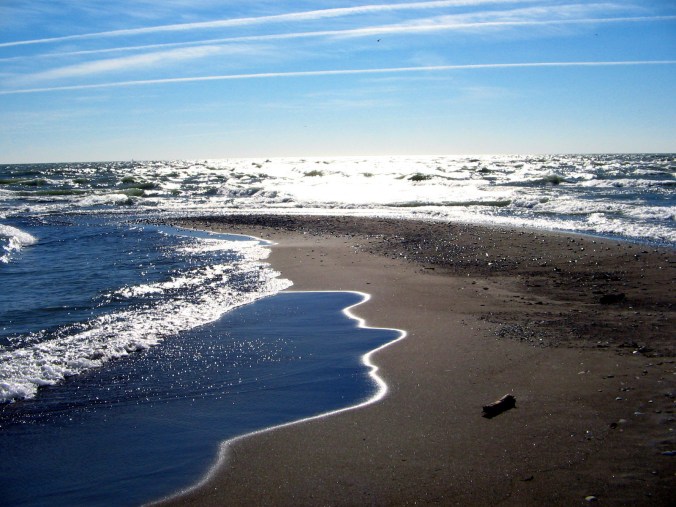
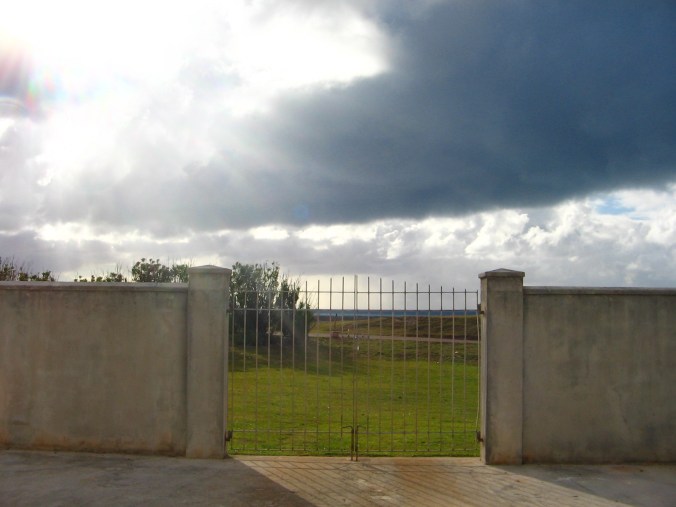 In Cornwall, I wrote and wandered a lot. That is what I love to do. I think I am closest to my true self when I do this. And while I was so often wrenched away from myself through the throes of anxiety and self-hate, fear and self-doubt, I was also glimpsing aspects of my deepest self. I used writing as my lifeline back to me. It was sometimes the only thing that sustained me in dark times.
 Muse of Tragedy