Crafting a Story

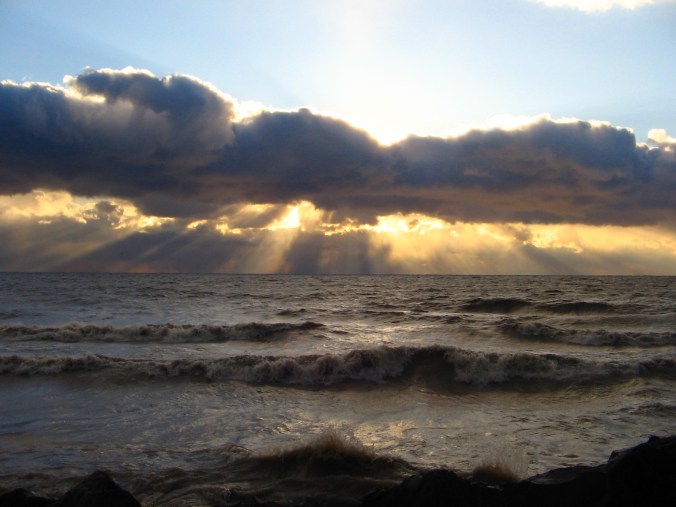
Capturing the Hidden Sunset out back of our Cottage at Point Pelee.jpgI lived with a wonderful family in Cornwall in their charming century home. I was a boarder, and although I craved my alone space, being part of a family was a lifeline for me. I was reeling from lost love, self-hate, and being thrown into the open, no longer with any anchor (i.e. school). I felt so utterly lost and confused, and so I started to grasp on to futures, stories, trajectories – anything that would get me away from. . . me. This family believed in me, and it was because of them that I avoided descending permanently into isolated despair as I desperately tried to feel better.
There was – and is – a wiser side to me, to all of us, even in the midst of pain. Some call it the wise, compassionate adult. This part of me would tell me, when I started obsessing over what everyone else was doing, that I was crafting my own story. Given that this was my own story, by nature, it had to be different than anyone else’s. It would tell me that I had the ability – and the choice – to live this story and to rejoice in this story, but that it wouldn’t always be easy. Writing was my lifeline to this part of me, both writing in my journal and writing poetry. Along with my Cornwall family, this adult in me carried me through this pain.

I had much more to learn from this part of me – I still do. The funny part is, the same pain is still with me – the narrative of this pain has not changed, despite my circumstances. I can read my journal from 11 years ago, and it fits the same narrative of my pain today. But the adult part of me, its voice and narrative, has changed and evolved as I’ve grown. I’ve learned to listen to it more closely, and I’ve slowly unraveled its messages. The pain is stagnant – a holdover from my earliest days played out over and over again. I learn little from it, and it yields only more anguish. The wise part of me is forever teaching me, however. The real journey has been to listen and to trust it.

Definitions

Who would I be

If someone approached

And defined me

If I cut my food in the other direction

Asked an invisible thing for protection

Wore my hair a certain way

Raised one finger as if to say

I don’t like you very much.


Who would you be

If you used someone else’s name

And worshipped some god steadily

Except on Tuesdays

But other days

You were a procession, all in flame,

And worldly honour as you played that game

You played it well, and it defined you.


But sometimes, it seemed to me,

That this procession went in circles.

And it got old and silly.

That’s when I turned to look at me

And picked up the pen and wrote discerningly

That’s when I learned to craft my own story

And do away with definitions.

Lionheart

the-tip-point-pelee

This blog was just supposed to be a testing out of sorts. I have no pretensions for it – at least I don’t intend to have any pretensions for it. It was meant to be a vantage point over which I take stock of how I got to be the way I am. I have descended further and further from myself these past few years, into the throes of fear, doubt, self-hate. Its roots go deep, long before Cornwall, but it was in Cornwall that I was forced to grapple with it, when there was no easy way out anymore. That’s usually what drives us to ask the big questions, after all: why am I like this? Why do I hurt so much? It’s amazing how long we can go on like this, burying our deepest pain in behaviours, people, substances. I don’t want to live like this any longer, but it’s hard to let go.

I don’t have much to write, so here’s a poem about being brave:

Lionheart

So do you have the courage

To stop countenancing the child?

Step by step now: slow, trusting movements

As you quake in your heart

And beg to be saved:

No one is here to save you

Because the only monster

Is that great serpent of rage inside.

So what are you going to do?

No running off to the ends of the earth

Or burying your face in gold or people:

Just silence.

And the endless dark inside you.

So what do you say?

Shall we explore this inky vastness?

Shall we dare to ask, how are you doing in there?

To do so is to have the heart of a lion,

Ready for this long journey

At the mouth of the cave.

Our Perpetuating Pasts

First Light after the Storm in the Courtyard of the Lab, Bermuda.jpgIn Cornwall, I wrote and wandered a lot. That is what I love to do. I think I am closest to my true self when I do this. And while I was so often wrenched away from myself through the throes of anxiety and self-hate, fear and self-doubt, I was also glimpsing aspects of my deepest self. I used writing as my lifeline back to me. It was sometimes the only thing that sustained me in dark times.
So there are these two strains, then: one is me in my truest self, that watches and hears and participates in the flow of life; the other is the wounded self, the ego, the child in us, who is full of fear, and tries to orchestrate a life and being that ensures the fear will never be disturbed. And thus fear lies in most of us like a sleeping dragon, slumbering over its glittering treasures, until something disturbs it, and it wakes up, ravenous and raging. This was the case for me in Cornwall: I had mostly kept the dragon slumbering during my time on earth by being in school, and filtering the fear into accomplishments and accolades. That was stripped of me the year I finished and went on to be a government employee in Cornwall, and no longer had these things to sustain me. I went into panic mode, and spent most of the year in paralyzing anxiety, consumed by a “sick fear” as I described it in my journal entries.

I called this post “Our Perpetuating Pasts” because of the deep history behind this fear, a history humanity must turn their attention to. You might have heard about it in phrases like “birth trauma”. Arthur Janov is one of the main proponents of this theory – he wrote The Primal Scream in 1970 to document the lifelong effects of prenatal and perinatal trauma in patients. The experience of terror imprints itself so permanently in the developing brain that our relationship with this terror continues throughout our lives, namely in situations that trigger these same feelings: our brain and its well-greased neural pathways creates superhighways to this original fear and we act it out. But normally, our brains have gating mechanisms to keep it at bay. And we have behavioural mechanisms as well: hyperactivity, anger, addictions, and so on. Hyperactivity towards accomplishments and praise coupled with difficulty concentrating certainly characterizes me, and so in Cornwall, when these outlets no longer existed, the gating mechanisms started to falter and I was consumed with nameless terror. I had no blueprint for these feelings, no understanding of them: they seemed to be about the present, and I acted them out as though they were about the present (see my previous post about My Fear of Bird Flu).

And, to be honest, I have continuously, throughout my life, sought out situations where I could relieve this terror. I have gone back to school, sought out romantic attachments, continued to scrutinize and control my weight: all of this, so that I wouldn’t have to feel that fear. But never once have these actions permanently relieved the underlying problems. Neither have drugs. As I’ve said before, I believe that there were purer parts driving me to pursue a life of learning and travel, to love people deeply, and move and be healthy. But if there was a gentle, loving, guiding sense of self tuned into the rhythms of life lending me a sense of purpose and direction, fear was the chauffeur, frantically stepping on the gas and breaking and pulling out maps and honking at others to get out of my way and overall making my life one rocky ride. And sometimes, while vaguely in tune to this higher path, fear as the chauffeur turned my life into a carwreck – a waking nightmare – so that I didn’t know up from down or left from right anymore.

Going back to my wandering and writing – this is one method to start to deal with the dilemma of terror. You need a foundation of self-compassion as an antidote to self-hate. The child, the fear, the ego – they need to trust you, and if you are the cold, exasperated, angry, frustrated adult they knew from their childhood, they will continue to resist and run with the feelings, and as a result, feel desperately bleak and alone. My Bible for self-compassion is Theodore Rubin’s Compassion and Self-Hate: An Alternative to Despair. It was written in the 1970s, and, like Janov, there are a few tenets here and there that I disagree with, but it is one of the paths to healing. Writing sustained me in Cornwall because, like I said, it was my lifeline to myself, to that warm sense of compassion and home. I’m still learning to cultivate it, but as Rubin argues, self-compassion is our natural tendency, and once the process is started, we will push for that state in ourselves.

But self-compassion requires bravery: for those of us accustomed to hate ourselves, letting those thought processes and behaviours go will feel like we are rudderless on the open ocean of fear. Indeed, that self-hate is one method of holding back intolerable feelings associated with original terror: as awful as it feels, it feels right, it feels like we have to keep doing it. . . or else. Or else what? I usually don’t have a straight answer right off the bat – I just have to. But with therapy and introspection, we realize the “or else” is akin to dying: we are recognizing that this original terror is so so awful that to relax our self-hating actions is to risk facing it, facing feelings so terrifying that they might just annihilate us. Our egos fear death in all forms – indeed so much of this original terror is tied into the very base, biological drive to survive, that drive which forms the basis of our fight or flight mechanisms so ready-at-hand in our mammalian brain. Self-compassion comes from higher up, and it takes practice. I had only inklings of it in Cornwall, but it nonetheless kept me from permanently falling into that blackness of self-hate.

Untitled.

I want to draw out the purest parts of myself

And set them in the sun to gather light

And hope

To reexamine them

And see if I grow warm again.

First Love

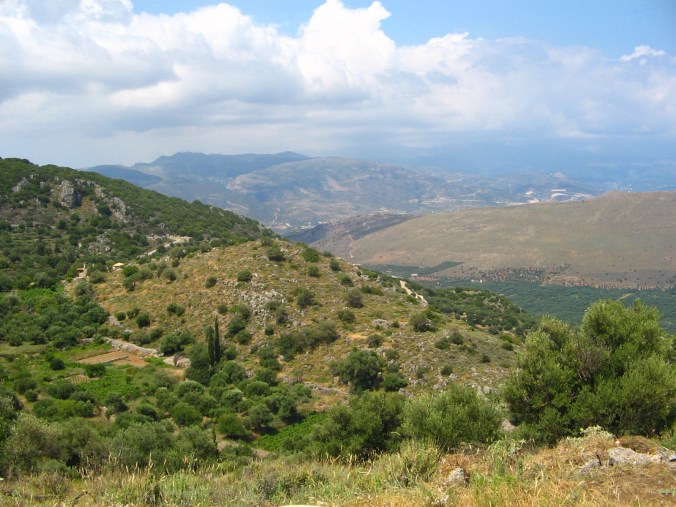
Megan - Greece 151.jpgCornwall was difficult for another reason, beyond my fear of impending bird flu: I was heart-broken. I had just come out of the most beautiful several months of my life thus far: first, I got to work on two projects in Bermuda with my professor and friends. But second, and most of all, I spent the summer on a field school on the island of Crete, and fell in love for the first time in my life.

I was always kind of late bloomer when it came to dating. I had never had a significant other throughout high school and undergrad, and had been on very few dates. So much held me back – insecurity, self-hate, fear – I’m sure many can relate. I never felt comfortable in my own skin. I worried what other people would say about the person I was dating (especially my family), as if my self-worth was somehow reflected in my significant other. I was shy. I seemed mostly in to people I couldn’t have. I could go on.

So on this field school, on my first night, I met someone. He came and sat with my friends and I at dinner. He bought me raki (Cretan moonshine) later in the night. I assumed he had a girlfriend. Throughout that first week he would talk to me, but I thought little of it. The second weekend, after our first full week of work, I was looking forward to seeing him. And when there was a moment when he was sitting alone at the local bar where we all hung out, I asked if I could come sit with him. We talked and talked and talked and I relished in every second of it. And it was clear to us and to everyone else that we were a thing.

And it was a fantastic summer! One of those summers where the stars seemed to align and we all just had fun. And I was in love. On Crete. Now, if there is one lesson in this experience (which I failed to learn), it’s that things happen at their own pace. I wanted so desperately to have someone throughout my adolescence and thought that there was something fundamentally wrong with me because I couldn’t find someone. I watched my friends find people and fall in (and out of) love. I watched them go on dates. And I railed against the fact that I could not do this. But I did – it happened in its own time. And I would not have changed a thing about it, the fact that I had my first experience with love during a summer on the island of Crete. Thank you, Universe. I’ll take that!

Now, I mentioned at the start of this post that I was heartbroken in Cornwall, the town where I went to work at my government job after Crete. This summer love, like many summer loves, was only destined for a season. He went off to start doctoral work at a very prestigious school in a very lovely location. And I went off to my government job in the mill town. I had some problems with this :). If you’ve read any earlier posts, you might notice I’m a tad hard on myself. And I did not take this outcome well. In fact, I used it to paint the picture of me that I had always painted of myself: I was the loser of the story, destined to play the sad character of the tale, the fool, the pitiful one, etc. etc.

Eeyore sounds like a good name for me here – where on earth did I come up with this tale? I have no idea. It stays with me to this day – that I will fall from grace and be the ultimate loser of the story. That’s what played out here, and this arrangement, him and me, just seemed to confirm this for me.

And I missed him – so terribly. I tried keeping in touch, but he eventually drifted away into his new life. We hadn’t made any plans to stay together – it seemed unrealistic, even though he had once shyly suggested there was an apartment waiting for me should I choose to come. But I could not leave the job I had lined up – that was not allowed in my mind. And plus, 100%, it would NOT have worked out. I can say this with 10+ years hindsight. Although I was full of bitter regret (and it is a bitter thing) at that time.

Most of all, though, I missed the antidote. The antidote to the pain I carried around inside of me – that feeling that I was a loser, that I didn’t measure up, that I was not ever going to be good enough. I was destined to fail – it was only a matter of time. And in wake of failure would come the bleakest abandonment a human could experience. That was my template, and love was an antidote to that. It was the drug I didn’t even realize I needed until it was being so lovingly, freely, and readily pumped into my veins that summer. More more more. I needed more. And then it was cut off, and I felt like I couldn’t breathe at times, the tightness in my chest was so all-consuming. Sick fear washed over me and clouded my world. I know this feeling all too well – it is not merely love-sickness, although love-sickness is a potent example of this feeling, an expression of this pain. It’s the emptiness of utter self-hate that is begging to be diffused with love and compassion that I haven’t learned yet to give myself. And so I look outward, for grades, accolades, attention. I know this pattern all too well – it’s one of the great and terrible themes of my life.

I’ll have much more to say about it soon.

In the meantime, here is a poem I spontaneously wrote after seeing an exhibit on Chinese art at the Royal Ontario Museum. What does this have to do with the above? Well, I was with my parents at the time, just back from Crete, reeling in the aftermath of my withdrawal. As I wondered the exhibit with my parents, my dad asked me about the boy I had met on Crete (you see, they met him, because they came and visited me on my field school) – did I keep in touch with him? Ouch ouch ouch. Why did you have to ask that? Anyways, a caption from the museum exhibit, something about playing a game with immortals, captured my attention around that same time, and I wrote a poem. Writing was my lifeline, then and now. It was what sustained me. And so this poem was just one example of what was really keeping me going then (and now):

I Dreamt of You

I dreamt of you, far along the shallow seas

You were a ghost and you whispered my name

As you drifted forth.

I dreamt of you as a child with a kite,

Running forever and ever over those hills

Until you too were soaring.

I dreamt of you in paradise, with the immortals

Playing that wonderful game.

Whenever I dreamed, you were there

And your spirit was free.

My Fear of Bird Flu

Cornwall (1).jpgMore from Cornwall. While I was living here, I made the decision pretty early on to do what I’d originally intended to do after undergrad, which was live abroad. I started looking into teaching jobs in Asia. My boss was furious – I was too naive to realize it at the time (thank God, because, as will become abundantly clear in the coming posts, I care way too much about what the world thinks of me). But he had hired me with the expectation that I would stay on, contract to contract, for a long time. Yes – I had not been hired as a permanent employee. Few people were in this sector of the government. So in my mind, it was perfectly legitimate to leave.

I was drawn to warmer climates, having lived my entire life in southern Ontario with its bitter winters – biting is a great term for the icy, dry wind that punches you in the face as you try to wobble up the icy sidewalk, simultaneously freezing and sweating from the struggle. When I found a program that based teachers in the tropical south of China, close to Hong Kong, my heart skipped. Hong Kong. Thus began my love affair with this city and its sublimity. I’m sure others would say I was a fool who was blindly in love, and that I didn’t realize all of Hong Kong’s faults and annoyances, but I didn’t care. I hadn’t even met Hong Kong face to face and already I started dreaming of it. So that was it for me. That was my program.

I was accepted to it – and then the fear started. I am full of fear, you must realize. And it attaches to everything. The core of it is abandonment for not being good enough – being left to a bleak wasteland, where everything is dimmed several shades down, and takes on the lifelessness and coldness of stone, and I myself become as numb and as lifeless as stone.

Most of us can’t sit with this fear: it’s old and mysterious, and wrapped up into so many experiences that triggered habituated actions and reactions to avoid these intolerable feelings. I certainly couldn’t handle it at the time, and I’m only starting to learn now, more than a decade on. So I created reasons for this fear, and solutions upon solutions to manage and get out of this fear.

My outlet this time? I became afraid of bird flu.

Bird flu – H5N1 – was rampant around 2006 in Southeast Asia. Mainly among domestic birds, but it also made the jump to wild birds and humans, with deadly consequences. In fact, it first made the jump to humans, from what we know, in Hong Kong. H5N1 was all over the news and the WHO and other organizations were constantly engaging in hand-wringing over whether or not it would start spreading from human to human. I feared it would become pandemic when I went to live in southern China, and that I would be trapped there, away from my family. I read everything I could get my hands on about H5N1 – blogs, news sites, commentaries, WHO reports – to try to figure out the statistical possibility that this would actually happen, desperately trying to tip the scales in favour of “no, this is not likely”. Yes, I became obsessed with, and at times paralyzed in, this issue. I was afraid of my future in China, but also fearful of backing out of the program (because I would hate myself for not embarking on my dream out of fear) – I felt like I had no way out of it. It was a veritable “hall of mirrors”.

But deep down, it was more about just being caught in a pandemic – it was a hating feeling, hating myself for being so stupid for going to live in southeast Asia during this outbreak, and also feeling mocked and hated by others for doing this: “What were you thinking? Wow, only an idiot would do something like that.” Those were the voices in my head.

What was the real reason I was scared and created this demon? Well, I had finished school – the one place where I had a steady stream of good grades and other accolades – and I felt like an utter failure, like I had strayed from my path, which was supposed to be towards grad school and more accolades and other such narcissistic supplies of pride. In other words, my antidotes for my self-hate were gone, and going to China was only bringing me further from those antidotes. At least I think that’s what I was doing.

So you might think I am pretty messed up for creating this demon in my head: what good did it serve me? Absolutely nothing, in hindsight. In fact, I developed wrist problems from searching the computer for hours on end for articles about H5N1, not to mention stiff muscles and upset stomachs and all those fun physical symptoms that come hand in hand with anxiety. It did me no good. But such is the manner of fear and self-hate. We need an out in those terrible moments, and we all find ways that, looking back, do us no good (at best) and are debilitating and destructive (at worst).

I’ll have much more to say about self-hate in the coming posts. And I’ll have much more to say about my time in China: yes I did go, and bird flu rarely crossed my mind when I was there. Traveling, being abroad, brought me right out of those awful ruminations. I’ll have more to say about that as well.

For now, here’s another poem I wrote as I tried to deal with this crippling anxiety as I prepared to make my move to China:

Everything

I’m ashamed for letting myself get that afraid,

I’m ashamed for fading into a shadow of my former self.

I don’t want to lose those things wondrous that I now have

But fail daily to realize.

A thought came to me this afternoon, as I put my guitar away,

Still a bad strummer:

I want everything out of life.

To travel to the ends the Earth and explore the boundaries of my heart

And return to home with a tale or two.

I want to do that, with everything in tow.

But I wondered, if perhaps it was better to instead let it all go

And resign yourself to one path, one dream,

And soar towards it unburdened.

Would that be better?