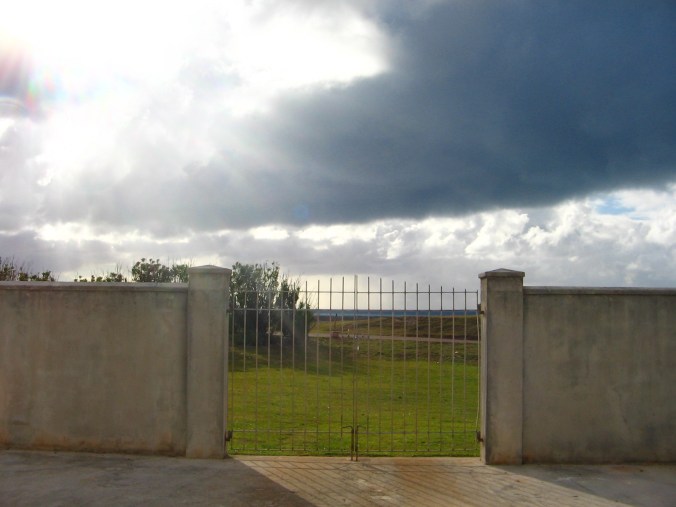
 In Cornwall, I wrote and wandered a lot. That is what I love to do. I think I am closest to my true self when I do this. And while I was so often wrenched away from myself through the throes of anxiety and self-hate, fear and self-doubt, I was also glimpsing aspects of my deepest self. I used writing as my lifeline back to me. It was sometimes the only thing that sustained me in dark times.
So there are these two strains, then: one is me in my truest self, that watches and hears and participates in the flow of life; the other is the wounded self, the ego, the child in us, who is full of fear, and tries to orchestrate a life and being that ensures the fear will never be disturbed. And thus fear lies in most of us like a sleeping dragon, slumbering over its glittering treasures, until something disturbs it, and it wakes up, ravenous and raging. This was the case for me in Cornwall: I had mostly kept the dragon slumbering during my time on earth by being in school, and filtering the fear into accomplishments and accolades. That was stripped of me the year I finished and went on to be a government employee in Cornwall, and no longer had these things to sustain me. I went into panic mode, and spent most of the year in paralyzing anxiety, consumed by a “sick fear” as I described it in my journal entries.
I called this post “Our Perpetuating Pasts” because of the deep history behind this fear, a history humanity must turn their attention to. You might have heard about it in phrases like “birth trauma”. Arthur Janov is one of the main proponents of this theory – he wrote The Primal Scream in 1970 to document the lifelong effects of prenatal and perinatal trauma in patients. The experience of terror imprints itself so permanently in the developing brain that our relationship with this terror continues throughout our lives, namely in situations that trigger these same feelings: our brain and its well-greased neural pathways creates superhighways to this original fear and we act it out. But normally, our brains have gating mechanisms to keep it at bay. And we have behavioural mechanisms as well: hyperactivity, anger, addictions, and so on. Hyperactivity towards accomplishments and praise coupled with difficulty concentrating certainly characterizes me, and so in Cornwall, when these outlets no longer existed, the gating mechanisms started to falter and I was consumed with nameless terror. I had no blueprint for these feelings, no understanding of them: they seemed to be about the present, and I acted them out as though they were about the present (see my previous post about My Fear of Bird Flu).
And, to be honest, I have continuously, throughout my life, sought out situations where I could relieve this terror. I have gone back to school, sought out romantic attachments, continued to scrutinize and control my weight: all of this, so that I wouldn’t have to feel that fear. But never once have these actions permanently relieved the underlying problems. Neither have drugs. As I’ve said before, I believe that there were purer parts driving me to pursue a life of learning and travel, to love people deeply, and move and be healthy. But if there was a gentle, loving, guiding sense of self tuned into the rhythms of life lending me a sense of purpose and direction, fear was the chauffeur, frantically stepping on the gas and breaking and pulling out maps and honking at others to get out of my way and overall making my life one rocky ride. And sometimes, while vaguely in tune to this higher path, fear as the chauffeur turned my life into a carwreck – a waking nightmare – so that I didn’t know up from down or left from right anymore.
Going back to my wandering and writing – this is one method to start to deal with the dilemma of terror. You need a foundation of self-compassion as an antidote to self-hate. The child, the fear, the ego – they need to trust you, and if you are the cold, exasperated, angry, frustrated adult they knew from their childhood, they will continue to resist and run with the feelings, and as a result, feel desperately bleak and alone. My Bible for self-compassion is Theodore Rubin’s Compassion and Self-Hate: An Alternative to Despair. It was written in the 1970s, and, like Janov, there are a few tenets here and there that I disagree with, but it is one of the paths to healing. Writing sustained me in Cornwall because, like I said, it was my lifeline to myself, to that warm sense of compassion and home. I’m still learning to cultivate it, but as Rubin argues, self-compassion is our natural tendency, and once the process is started, we will push for that state in ourselves.
But self-compassion requires bravery: for those of us accustomed to hate ourselves, letting those thought processes and behaviours go will feel like we are rudderless on the open ocean of fear. Indeed, that self-hate is one method of holding back intolerable feelings associated with original terror: as awful as it feels, it feels right, it feels like we have to keep doing it. . . or else. Or else what? I usually don’t have a straight answer right off the bat – I just have to. But with therapy and introspection, we realize the “or else” is akin to dying: we are recognizing that this original terror is so so awful that to relax our self-hating actions is to risk facing it, facing feelings so terrifying that they might just annihilate us. Our egos fear death in all forms – indeed so much of this original terror is tied into the very base, biological drive to survive, that drive which forms the basis of our fight or flight mechanisms so ready-at-hand in our mammalian brain. Self-compassion comes from higher up, and it takes practice. I had only inklings of it in Cornwall, but it nonetheless kept me from permanently falling into that blackness of self-hate.
Untitled.
I want to draw out the purest parts of myself
And set them in the sun to gather light
And hope
To reexamine them
And see if I grow warm again.
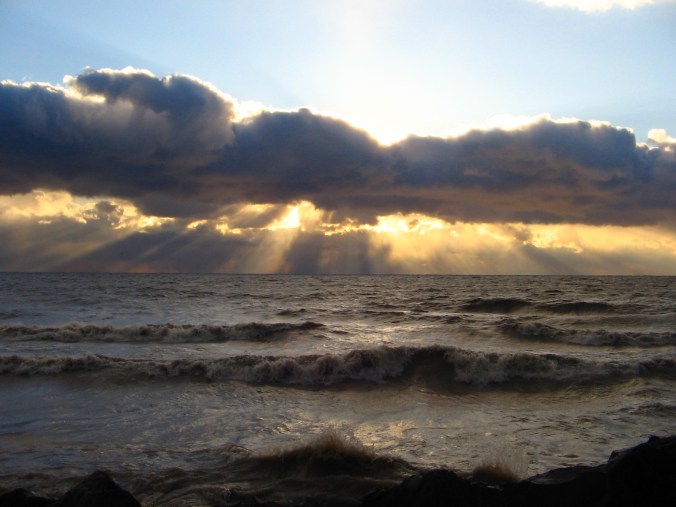 I lived with a wonderful family in Cornwall in their charming century home. I was a boarder, and although I craved my alone space, being part of a family was a lifeline for me. I was reeling from lost love, self-hate, and being thrown into the open, no longer with any anchor (i.e. school). I felt so utterly lost and confused, and so I started to grasp on to futures, stories, trajectories – anything that would get me away from. . . me. This family believed in me, and it was because of them that I avoided descending permanently into isolated despair as I desperately tried to feel better.
 Muse of Tragedy