 Most of us will marry the wrong person. This is not because that person is “wrong” for us per say, but because we operate primarily from places of pain when choosing a partner. This pain stems from our earliest infancy, in troubled experiences and traumas that get played out and entangled with later experiences such that it is impossible to tease out the original pain. But it is there, stored in our soul, and to the extent that we seek to avoid it, we will act on it, accustomed as we are to sliding down those deep and well-greased neurological pathways. In love, we are often looking to be healed from this pain, and the other person (or other people) can never do that for us – at least not over the long term.
How many times have I fallen down these well-greased chutes? Too many times. I have met people, felt a spark, started something up, and imagined how wonderful life would be with this person. My brain starts churning out some kind of delicious chemical – oxytocin maybe? And I am gone, sliding down the rabbit hole. It is a drug, and I’d rather spend every moment in my head with this person and this blissful life than doing anything else. As time goes on, a creeping fear starts to infringe upon this delicious blissfulness – what if the other person doesn’t like me/text me back/follow through/etc.etc.?? What if I do/say/don’t do something and they drift away, realizing I am not worth it? I am on a knife’s edge. Those impossible heights I achieved in my head start to emit slow tremors, bits of rock and dust ominously cracking off. The fear – which is really a deep-seated wasteland of dread and loneliness – seeps in, eroding my bliss, and the foundation rumbles evermore. That other person simultaneously becomes an object of need and repulsion – the greatest form of cognitive dissonance. I need them to dissolve my bleak wasteland of an existence and fill it with light, but they also run the great risk of making my wasteland all too real by rejecting me, or at the very least not living up to my fantasy-world version of them. The entire world is a mess – and it’s all completely in my head. An elephant-size burden has been placed on the other person’s shoulders and they are (thankfully) unaware of this. And in the end, the burden is on my shoulders.
Who is this person, who does this? It’s the most wounded part of me, seeking a way to avoid the pain from these wounds. That first summer of love, as I wrote in a previous post, was a drug I didn’t even realize I needed until it was being freely given to me, and then harshly cut off. I spent years trying to get it back, although the seeds of that pain were planted long before that summer, and I’d used other means to avoid pain (achievements). When we operate from the most wounded parts of ourselves, we only reinforce within ourselves that this pain is a problem and we need to fix it – NOW. It’s not the problem – our attempts to avoid it and “fix” it are the problem. The pain is simply there, and the real practice is learning to sit with it and not identify with it: this is just energy passing through us. It may not feel good, but it is not about what’s going on now. It is a product of so many years’ worth of traumas and experiences that we are trying, in the most biologically human of ways, to get rid of. Falling behind the pain and letting it go, is going against millennia-worth of evolution. And perhaps all of this pain is an evolutionary stepping stone to something more. I certainly think it is at the root of so many of our modern-day problems, everything from our own psychological issues to large-scale geopolitical conflicts. And yes – I do see my post-summer love-sickness as connecting into global crises. It’s all connected – that is the beauty and the tragedy of it all.
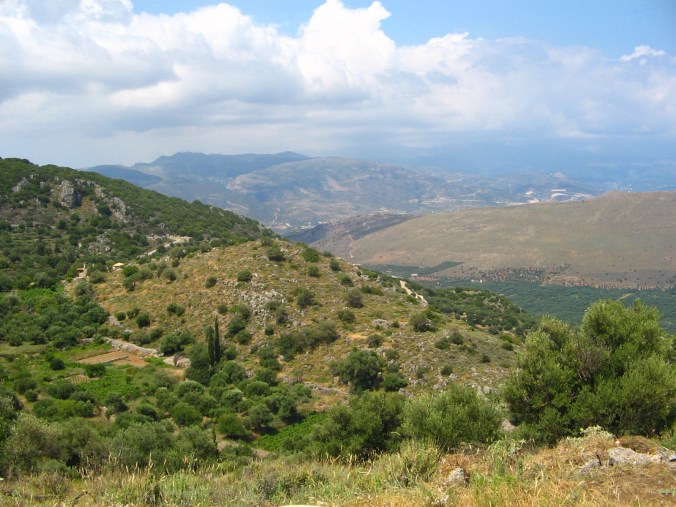 Cornwall was difficult for another reason, beyond my fear of impending bird flu: I was heart-broken. I had just come out of the most beautiful several months of my life thus far: first, I got to work on two projects in Bermuda with my professor and friends. But second, and most of all, I spent the summer on a field school on the island of Crete, and fell in love for the first time in my life.
 More from Cornwall. While I was living here, I made the decision pretty early on to do what I’d originally intended to do after undergrad, which was live abroad. I started looking into teaching jobs in Asia. My boss was furious – I was too naive to realize it at the time (thank God, because, as will become abundantly clear in the coming posts, I care way too much about what the world thinks of me). But he had hired me with the expectation that I would stay on, contract to contract, for a long time. Yes – I had not been hired as a permanent employee. Few people were in this sector of the government. So in my mind, it was perfectly legitimate to leave.
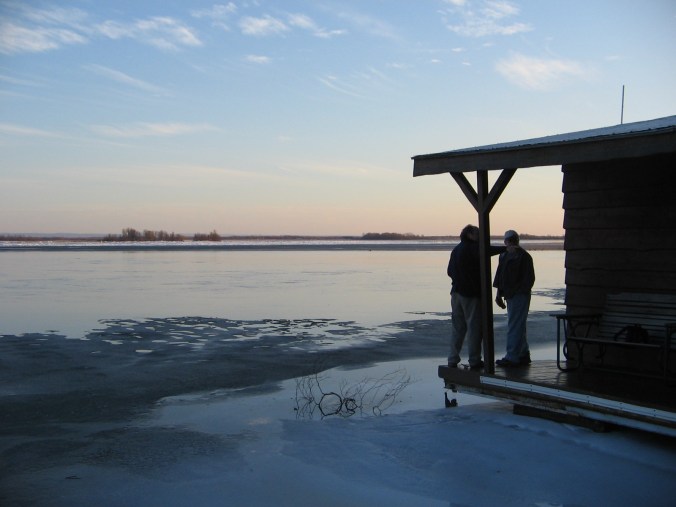 This is the other “mill town” I lived in – Cornwall, Ontario. I had quite a time here: I worked for the Federal Government on Water Street and dreamed of living abroad in Asia. My entertainment after work consisted of going to the Coles Bookstore in the town mall and flipping through travel books. But I did live with a wonderful family, who became my family, and I made wonderful friends. My heart was oriented to the wider world, however, and I had a lot of difficulty being here and being with myself at times. I wrote this poem to articulate what I was going through:
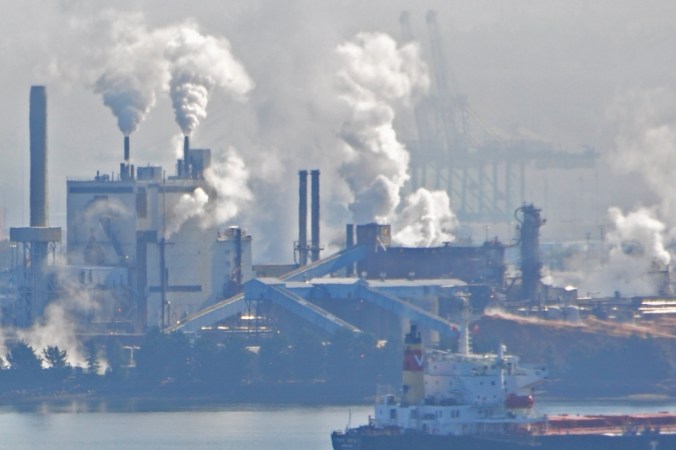 This is the port of the city I live in, Tacoma. I’ve lived in “mill towns” before (Cornwall, ON), although I spent the first 20-odd years of my life in a quiet bedroom suburb of Toronto. I’ve also lived in stunningly beautiful places, including Vancouver, Palo Alto, and southeastern China, which nonetheless are rife with their own issues and problems. There’s something I like about Tacoma and its un-pretentiousness. As much as I prefer the dramatic landscape of Vancouver or the storied grandiosity of Hong Kong, my smaller existence in Tacoma leaves me with quieter space. Not that this quiet is always peaceful – in fact I’ve been struggling greatly here, just as I struggled in Cornwall. Both times (Cornwall was 10 years ago), I was in transition, and filled with anxiety. And both in these kind of depressed industrial areas set amidst pretty landscapes. Looking back at my time in Cornwall, where I was a young, government employee fresh out of undergrad, I relish what it had to teach me, and the growth I experienced. So I look to my time in Tacoma to do the same. Most of all, I am trying to witness and participate in the unfolding of the universe, as Michael Singer (my new favourite author), advises.
 Muse of Tragedy